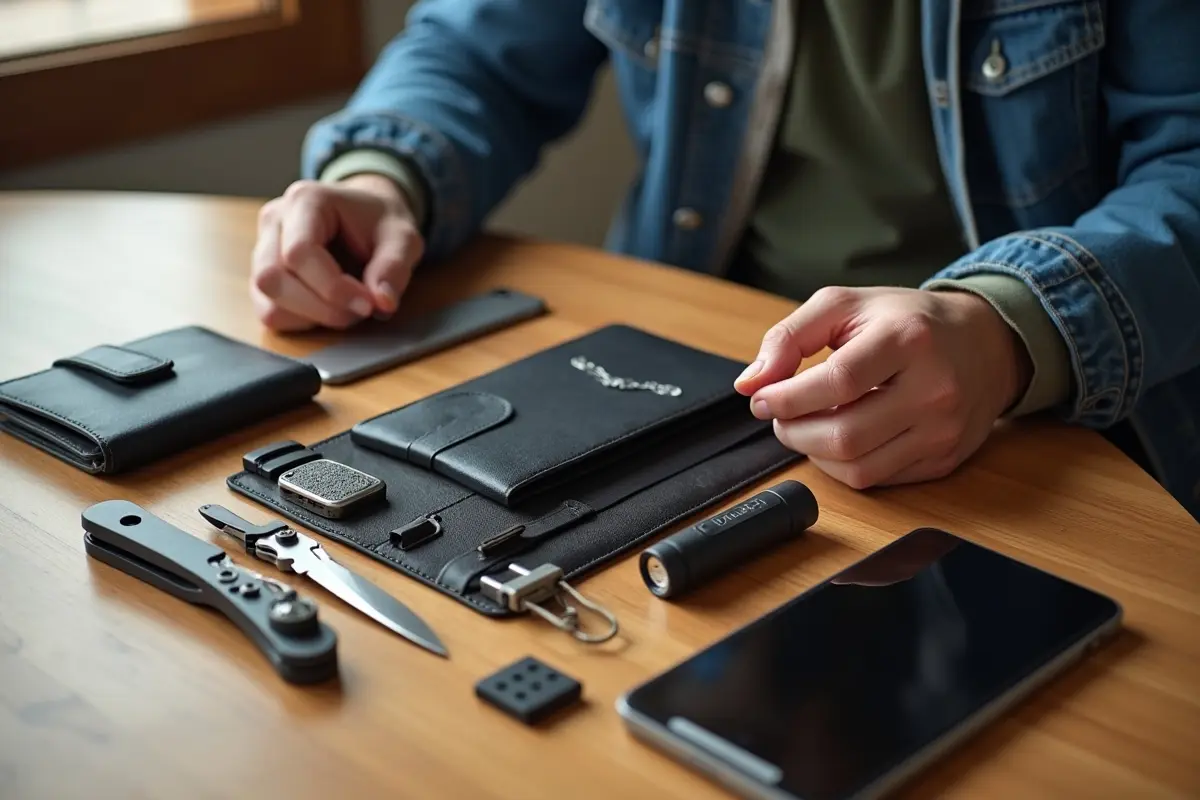
The Psychology of Preparedness: Why Everyday Carry Is More Than Just a Trend
There are numerous items that people always have with them, and when counted often amount to more than you’d expect. You might find a multi-tool, a spare battery pack, a small flashlight, or maybe a pocket knife you’ve had since college. To an outsider, it seems like a hobby, or something darker – a costume for people who want to play hero when the world falls apart. More accurately, it’s a commonsense response to the mundane reality that most of us feel in control of almost nothing.
Everyday Carry Is A Response To A Low-Control World
Everyday carry, or EDC, is often derided as a trend because that’s the kind of catch-all, easy label we throw onto things when we haven’t taken the time to properly understand them first. Except the concept is as old as humanity. We’ve carried tools on our person since we first learned to craft with flint and stone, convenient pockets of space in our clothes, pouches, and belts.
What has changed is the necessity: the modern world may be more comfortable and safe than that of our ancestors, but it still hums with the low frequencies of the unexpected, from weather warnings and financial insecurity to the simple fact that our infrastructure is more fragile than we’d like to believe. Carrying a few tools isn’t cosplay (well, it doesn’t have to be). It’s daily, repeatable statement: whatever else this day throws at me, I’ve got this part covered. And that sort of statement, as we’ll see, makes a lot of psychological sense.
Locus Of Control, and Why Carrying Tools Calms People Down
Locus of control is the degree to which someone believes their outcomes are shaped by their own actions versus outside forces. People with a strong internal locus of control tend to handle stress better. They believe their choices matter. People who feel like life happens to them, rather than with them, report higher anxiety and lower resilience when things go wrong.
Here’s the connection: preparedness habits, even small ones, nudge that internal dial. A person who has a flashlight, a way to purify water, and a basic first aid kit isn’t guaranteed a better outcome in a real emergency. But they feel less at the mercy of the situation, and that feeling changes behavior. It keeps people calmer, which keeps them thinking clearly, which actually does improve outcomes. The gear is partly symbolic. The symbolism isn’t fake, though. It does something real to how a person responds under pressure.
This is worth sitting with for a second, because it explains why EDC culture has grown even in places with reasonably stable infrastructure and low actual disaster risk. It’s not really about the disaster. It’s about the daily sense of agency.
Optimism Bias Is The Thing Preparedness Has To Overcome
Many people don’t prepare for emergencies because many people assume that emergencies happen to other people. This is optimism bias: A well-documented human tendency to underestimate our own likelihood of experiencing something bad while accurately (or even overestimating) everyone else’s likelihood of the same bad thing. It’s a handy bias in moderation. It keeps us from all being Eeyore. It’s also the reason most households don’t have a plan or supplies for even relatively minor disruptions.
The data might back up optimism bias more thoroughly than many people assume. In the Federal Reserve’s 2019 Report on the Economic Well-Being of U.S. Households, 39% of American adults said they wouldn’t have the money available (in cash, savings, or on a credit card they would be able to pay in full when the statement came) to handle a $400 emergency expense. That’s not a stat about hurricanes or the grid failing. That’s a stat about a flat tire or a busted appliance, the kind of low-grade emergency everyone has eventually. If nearly 40% of people can’t handle a $400 surprise, the odds that they’re sitting on extra batteries and water with a plan for a multi-day power outage are not high.
Considering that a major inconvenience is possible, even probable, if you live long enough, isn’t pessimism. It’s closer to emotional adulthood. The people who imagine a bad week and how they would manage it aren’t the scaredest people in the room. They are often the calmest people, because they already had their freak-out on a quiet Tuesday years ago and turned it into a filing cabinet full of laminated checklists.
Gear Isn’t The Same Thing As Readiness
This is where EDC culture gets a little cringey, and it’s worth having an honest conversation about the distinction between readiness and collecting. A drawer full of knives, three flashlights that are still in their packaging, a tactical pen that no one has ever used for anything more dangerous than signing a delivery receipt. That’s not readiness. That’s inventory.
Readiness begins with a written emergency list, not a shopping cart. A list makes you confront the question: what will actually be needed if the power goes out for three days, if a storm makes the roads impassable, if an injury has to be treated until help can get there. Gear only becomes useful when it gets matched to a real need. Buying first and planning after is how you end up with spares and holes in the critical categories that really matter – like water or first aid.
This isn’t an anti-gear argument. It’s an argument for the right sequence. Identify real risks that your home and lifestyle face. Write them down. Then start shopping for items that solve specific things on that list. Skip the list and go straight to acquisition, and preparedness turns into a consumerism-flavored occasional splurge of responsibility.
The Mundane Case For Carrying A Few Things
While disasters are what people talk about when it comes to the EDC mindset, they’re not why most people actually put their kit on every day. It’s the small things. A dead phone right before an important call. A screw, loose on your glasses. A minor cut that’ll need a bandage before it gets infected. A parking garage stairwell with a blown light.
This is why EDC has grown well outside the “prepper” subculture, and instead become a normal part of the day for people who have never once worried about the “end of the world” – and a multitool solves a Tuesday problem many more times than it ever solves a crisis. Preparedness earns its keep in all of these little, mundane moments, long before it ever needs to make an appearance in something major. And that’s what makes the practice stick. You don’t keep doing something for years because it might come in handy once. You keep doing it because it helps quietly every week.
Why Power Loss Is The Emergency That Matters Most
Bad weather causes power cuts. Overloaded systems fail in hot weather. Simple system breakdowns cause electrical problems. None of these situations need to be flooding the news and they are a part of daily life that everyone will experience, probably many times. Power failure is a fundamental emergency that almost everyone is likely to face repeatedly in their life, no matter where they are located.
An absence of light makes every other emergency more dangerous. As soon as you don’t have enough light, you don’t have a clue of your surroundings. You can’t assess a room, a stairway, or your street. Small trip hazards become big dangers, as does anything such as a spill or a dangerous smell that you might not see or detect. Fear soars as your level of uncertainty rises. And nothing pushes up your level of uncertainty like losing your vision.
That’s why a reliable light source is one of the most important things you can add to your emergency kit. Darkness and the fears that come with it can be instantly eradicated by a good light. A cell phone light flickers out in a moment and uses up a battery that you’ll probably need for other things. You don’t want that. You want a real flashlight that’s built for the job, that has the battery power and the durable design that will make a difference when you really need it. This is why some people keep a set of dedicated flashlights on hand, rather than relying on the quickly-dying dregs they have in their drawers. It’s a small investment that fixes a huge, recurring problem that virtually everyone will encounter.
What Actually Belongs On An Emergency List
A true emergency list should be brief, clear, and focus on specific categories rather than brand names. At the very least, you should consider the following:
Light: A trustworthy source of light that is not reliant on the electrical grid.
Communication: A battery pack in working order, and/or a means of getting information if regular channels are down.
First aid: Basic supplies for manageable cuts, burns, and injuries, all kept someplace that you won’t forget.
Water: Either store water or have a way to purify drinking water.
Warmth: Blankets, extra clothing, or warmth that doesn’t depend on electrical cords.
Power plan: It’s the most frequently ignored item on this list, and could arguably be the most important one on it.
You should go through a list like this in sequence, precisely because some of the most common issues aren’t about your choices. They are about your environment and habits. The list for an apartment dweller is different from the list for a homeowner with a yard and a car in part because one of those people is already automatically at higher risk for a power failure to begin with. Write the list first. Buy the items category by category, and above all else do not overbuy in the fun categories (knives, tools) and under-buy in the boring, unattractive ones (water, first-aid). Then think about what you’ve built.
Maintenance Separates Readiness From Theater
A household that was ready two years ago isn’t necessarily ready today. Batteries die out. Water stashed in the wrong vessel soon becomes stale or becomes a breeding ground for unknown organisms. First aid materials lose their effectiveness unnoticed. Seasons change what’s actually useful, and no alarm goes off to remind you.
A summer preparedness kit is vastly different from a winter one. Ready availability of some items less used in a particular season may make room for more urgently required items with the changing season. Just allocating space for the kit isn’t enough. You need to go through the kit from time to time to see that all the items on the inventory are in place.
The majority of people don’t give this a thought. As a result, they end up with a kit that looks complete on a shelf but falls apart under actual use. The kit should be reusable over the years with only minor replacements and tweaks to individual preference. Reviewing the list, and the items therein, and physically examining the items in the kit for relevance must be done at least twice a year. The impending change of season is a good reminder to do so.
A Small, Deliberate Habit Against A Chaotic Backdrop
The enduring appeal of everyday carry, long after it became a mainstream concept, is not specifically related to emergencies. It’s more about being humble. Every day we carry small items as an admission that we may encounter problems, we don’t have control over most things, and that making a few thoughtful decisions can help us be better prepared. It’s not about being paranoid, but rather about being self-sufficient without all the unnecessary drama usually associated with that term.
The advice is simple: only carry what you will actually need. Write down the list before assembling your gear. Review it every six months. None of this will prevent you from having a bad day. It will just ensure you are prepared to face it rather than being caught off guard.