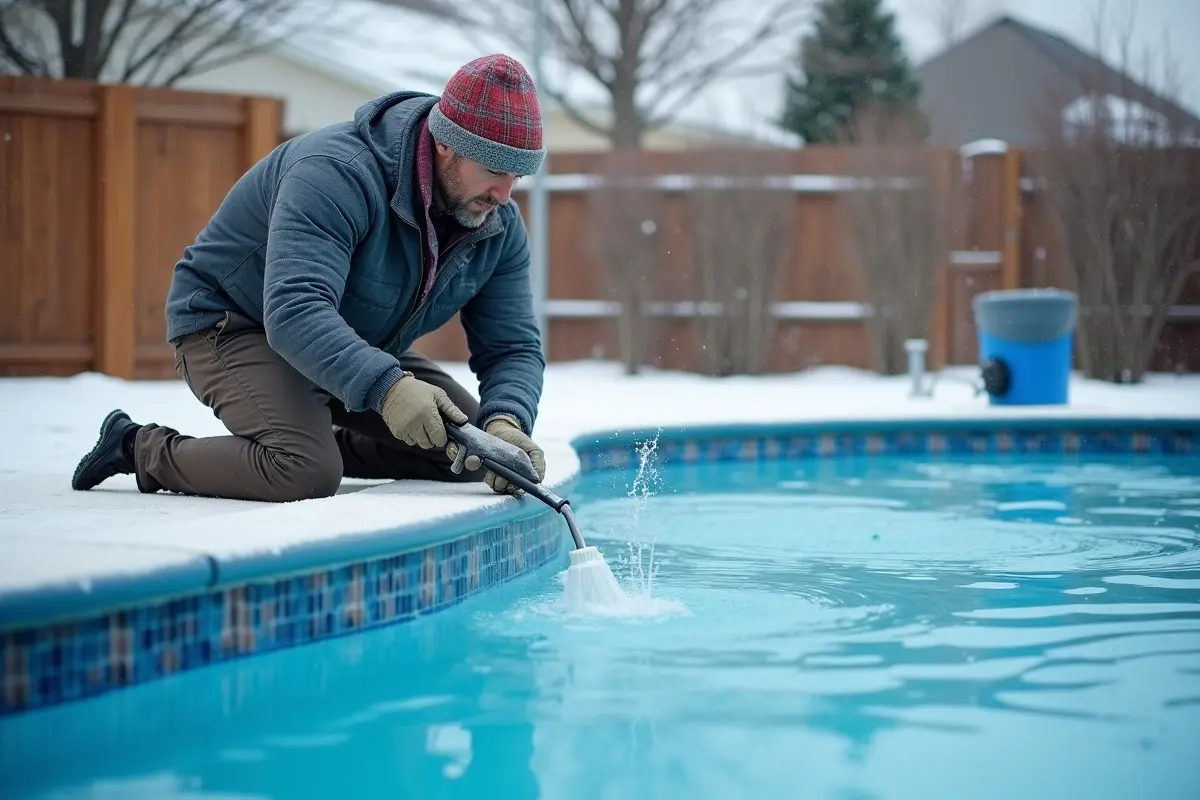
Why Neglecting Your Pool During the Off-Season Costs Double the Money in Spring
Many pool owners believe that if they skip maintenance for the winter, they are saving money. But the truth is that they will end up with a much higher bill in the spring to get the pool back in shape. This will likely be more expensive than just maintaining it properly in the first place. The damage that builds up over an unmanaged winter – from unbalanced chemistry to algae growth to equipment wear – doesn’t announce itself until it’s already costly.
What feels like a few months of savings can quickly become a repair bill that wipes out an entire season’s budget.
What A Neglected Pool Actually Costs To Fix
If you wait to take action in the spring, you’re far more likely to fail in your attempt to resuscitate the pool. You might spend several hundreds of dollars on chemicals to find the water is still not clear or sanitary, then need to hire a professional pool care company to come backwash, vacuum, and do other special treatments to get the pool’s water back to a state where it’s safe.
The costs add up faster than most owners expect. A single professional remediation visit can run anywhere from $200 to $500, and that’s before factoring in the chemicals, replacement filter media, or any equipment that failed over winter due to neglect. If the water is badly compromised, multiple visits may be needed before the pool is safe to swim in.
When you total it up, the bill for a single neglected winter can easily outstrip an entire year’s worth of routine monthly maintenance – and that’s assuming no permanent damage was done to the plaster, tiles, or equipment along the way.
Why Mild Climates Are The Most At-Risk
Many people believe that pool winterization is only necessary when the temperatures drop below freezing. In colder areas, we know the routine – the pipes are blown out, equipment is winterized, and we’re prepared to accept that the pool is closed for the season.
In warmer areas, no one goes through these motions, so pools fall into a gray zone. The water doesn’t freeze, so people assume it’s fine when, in reality, algae is an opportunistic organism that doesn’t need frost to slow down its reproductive rate. It also grows in cooler water. Phosphate levels rise as organic material lies on the pool bottom. Black spot algae, which roots directly into pool walls and is virtually impossible to kill, thrives in low-sanitizer conditions.
Residents of warmer regions put all this out of their minds and ensure the water is kept balanced month by month by paying a small fee to a professional team specializing in pool maintenance perth. The difference in the spring is like opening a new pool every year.
The Chemistry That Goes Wrong Quietly
The chemistry of water is dynamic. The pH will edge up, total alkalinity is lost to the first heavy winter rain, and calcium hardness goes both up and down. None of these are large on any given day. That’s why they’re so insidious. They’re large over the course of the winter if they’re not regularly corrected.
Low calcium hardness isn’t a serious issue in itself, but the water will become aggressive and start to eat cement out of your plaster. High calcium coupled with a too high and unstable pH will form a rock all over your tiles and equipment. If left uncontrolled, the buildup can be so bad it will take a jackhammer to remove it. The same couple of feet of water left in your chlorinator cell will have so much calcium in it that the cell will have lost a large percentage of its output by June. In some cases, it’s better to just consider it consumed and take it out of service after damaging it for half a year.
Your pump tells the same story. Stagnant water with no circulation is corrosive. All winter the seals will be drying out. The bearings will be wearing out. The heater’s off, but in two feet of East End water, it’s suffered too. The repair/replacement bill for the equipment from a single year of neglect frequently exceeds the chemical bill.
The Drain-And-Refill Trap
When a pool turns black or dark green in spring, the instinct for many owners is to drain it. Start fresh. It seems logical, but draining a pool carries serious structural risk.
Pool shells – whether concrete, fiberglass or vinyl – are designed to hold water. The water provides weight that counteracts hydrostatic pressure from the groundwater surrounding the shell. Remove that water and the ground pushes back. Pools have been lifted partially out of the ground by exactly this pressure, causing structural cracking that costs thousands to repair.
Beyond the structural risk, refilling an emptied pool uses a significant volume of water and requires a full chemical startup from scratch. The savings aren’t there. The risk is.
What Maintaining Your Pool Through Winter Actually Looks Like
Taking a passive approach to off-season pool maintenance isn’t asking a lot. The pump should run a few hours a day – not the eight to 12 hours a day you’d run for optimal summer chemical distribution and skimming, but enough to keep chemicals from settling and prevent stagnation.
Check and adjust chemical levels once a month, and if no harmful microorganisms are killed by the relatively low concentrations of chemicals in the pool, there’s no risk of blooms or algae getting a foothold. Keep the pool covered if you can. A cover reduces leaf and debris loads as well as sheltering the water from the sun. The sun speeds phosphate buildup.
Off-season care isn’t time off from pool ownership. It’s just a reduced workload. Open up the properly maintained pool, and all you should need to do is give it a good clean, check the chemical balance again, and flip on the heater. A week later you’re swimming. Skimp on the off-season care and you’ll soon spot it. Getting back into your pool will be a more time-consuming and costly affair.